

At first glance, Shatta, harissa, and zhoug might look interchangeable. They’re all chilli-forward condiments, deeply tied to Middle Eastern and North African cuisines, and often described—incorrectly—as “hot sauce.” But spend a little time with each, and the differences become clear. These condiments may share heat, but their origins, flavours, and uses are entirely distinct.
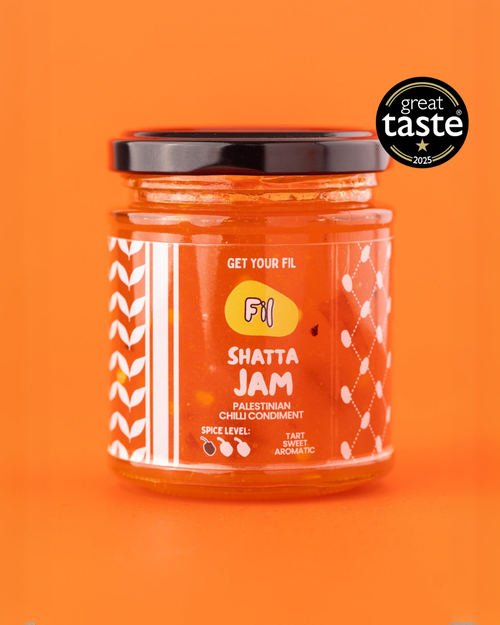
Shatta is the Palestinian expression of spice. The word itself simply means “chilli” or “heat,” and as a condiment, it’s intentionally flexible. Traditionally made from fresh or fermented chillies, salt, and sometimes garlic or vinegar, Shatta prioritises brightness and immediacy. It’s not designed to dominate a dish, but to lift it—spooned onto eggs, lentils, chicken, or eaten alongside bread and olive oil. Every household has its own version, and that variability is part of its identity.
Harissa, by contrast, is bold and structured. Originating in Tunisia, it’s typically made with dried red chillies, garlic, olive oil, and spices such as coriander and caraway. Smoky, rich, and deeply spiced, harissa is often cooked into dishes rather than added at the table. It brings warmth more than sharpness, and its flavour profile is fuller, darker, and more layered than Shatta’s.
Then there’s Zhoug, a Yemeni green chilli sauce that leans heavily into herbs. Fresh green chillies are blended with coriander, parsley, garlic, and warming spices like cardamom and cumin. The result is bright, grassy, and aromatic, with heat that hits quickly and fades just as fast. Zhoug is commonly paired with bread, grilled meats, or falafel, and adds freshness as much as fire.
What separates these condiments isn’t just ingredients—it’s how they’re used. Shatta is everyday heat. Harissa is depth and intensity. Zhoug is freshness and fragrance.
Understanding these differences isn’t about choosing one over the others. It’s about knowing when each belongs. And once you do, your cooking becomes not just spicier, but more intentional.
0 comments